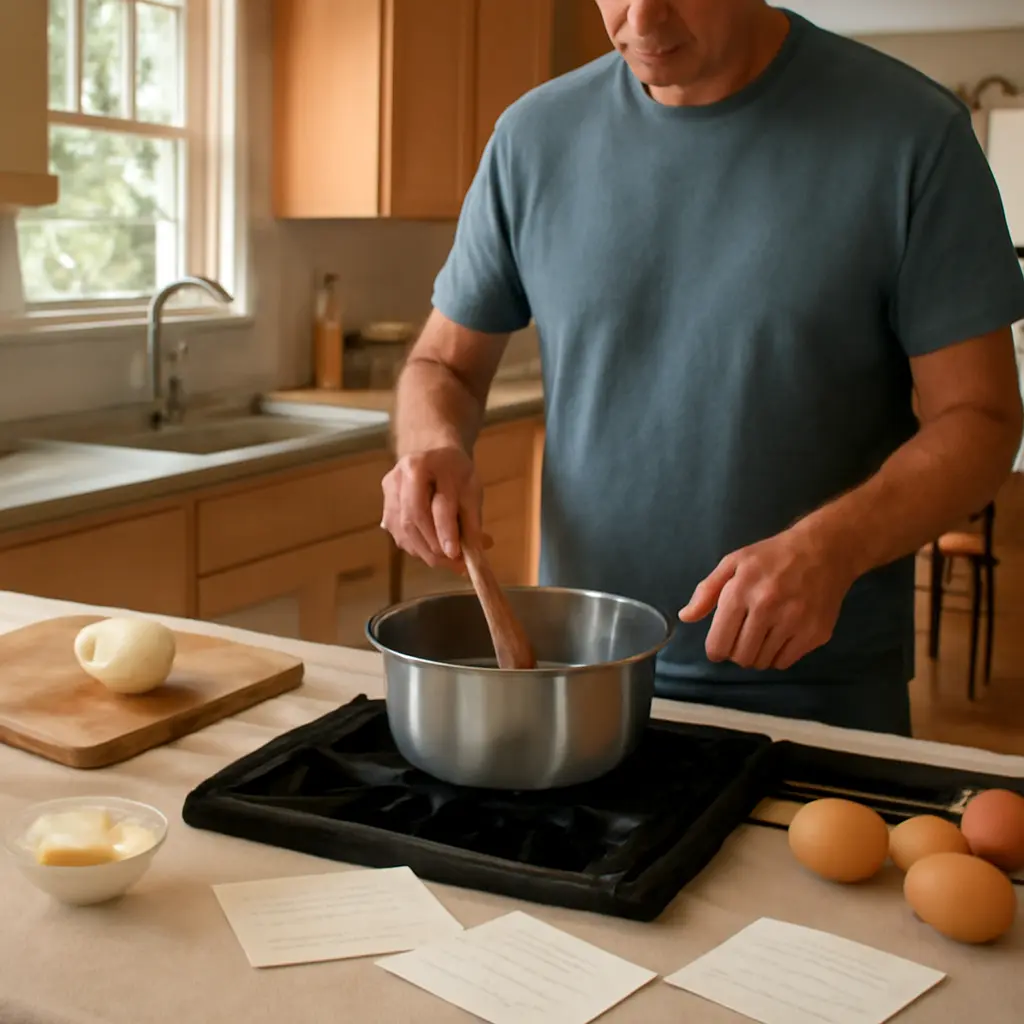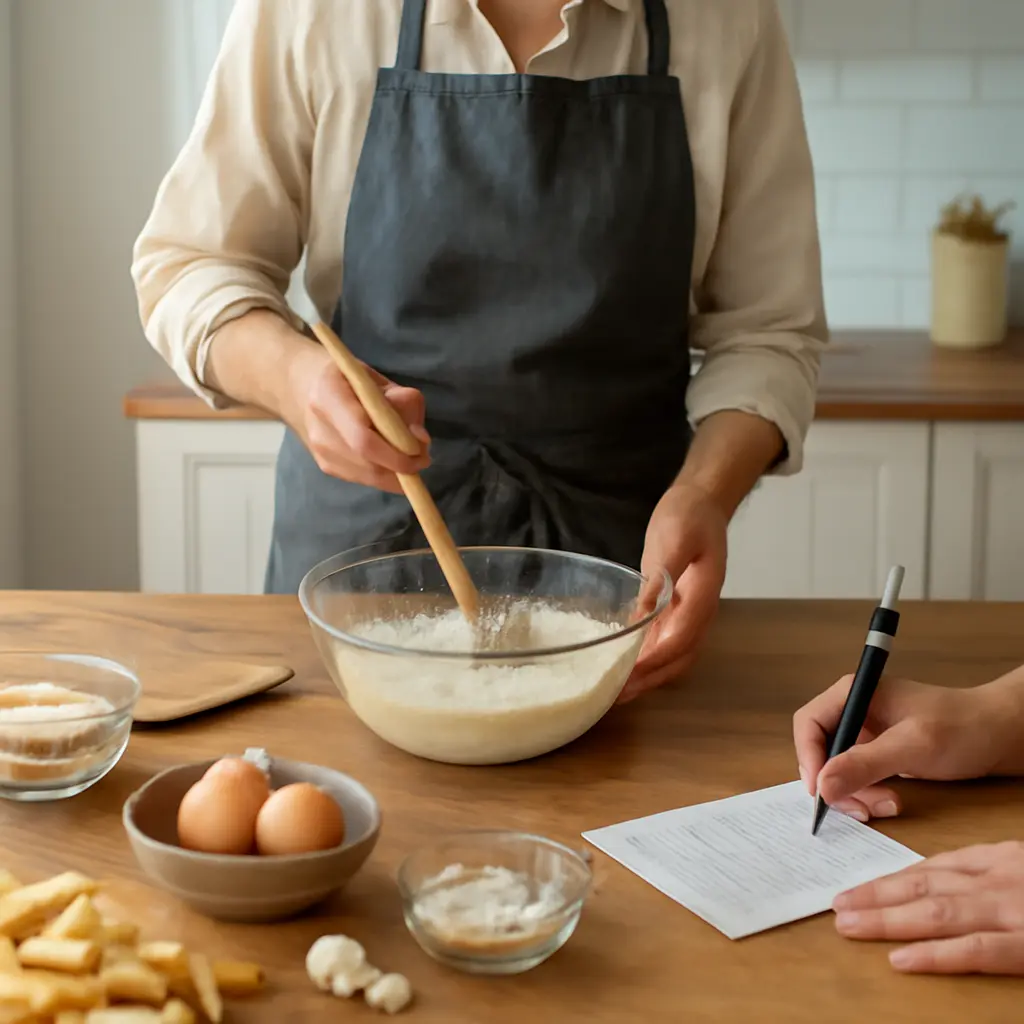
Family recipes are more than instructions for preparing food: they are records of family life, cultural knowledge, and relationships, carried forward through ingredients, techniques, and shared meals. They preserve memories by linking dishes to people and occasions, and they help pass heritage between generations. Research on food and memory, together with demographic and cultural studies, helps explain why handwritten recipe cards, oral instructions, and familiar flavors can hold meaning far beyond the kitchen.
Family Recipes Preserve Memories and Heritage Through Food, Story, and Practice
A family recipe is a set of food-preparation instructions associated with a household, kinship group, or family tradition. It may be written down, remembered, improvised, or learned by watching someone cook. Its heritage value comes not only from the dish itself, but also from the people, places, languages, and occasions connected to it. A recipe can therefore work as a practical record and as a prompt for remembering: its smell may bring back a holiday, while a note in the margin may preserve a relative’s advice.
This matters in a mobile and culturally diverse world, where families may live far apart or across national borders. The United Nations estimated that 281 million people lived outside their country of birth in 2020, representing about 3.6% of the global population. That figure does not measure family recipe exchange directly, but it illustrates how many people may use food traditions to maintain connections across distance. The sections below consider how recipes preserve personal and collective memory, transmit cultural knowledge, adapt through migration and change, and remain meaningful through documentation and shared cooking.
Family Recipes Preserve Memory Through Sensory Cues and Family Narratives
Food-memory research describes the strong links between eating, sensory experience, emotion, and autobiographical recollection. Psychologist Susan Whitbourne and other researchers have discussed how familiar sensory cues can evoke memories of earlier life events; the smell or taste of a dish may bring a particular person, place, or period to mind. A recipe is not a scientific guarantee that a memory will be accurate, but it can provide a concrete starting point for family storytelling.
Sensory Memory and Familiar Dishes
Sensory memory is recollection prompted by cues such as smell, taste, texture, and sound. The aroma of simmering broth, the crunch of a particular pastry, or the rhythm of kneading dough can become associated with repeated family experiences. When relatives prepare a familiar dish, these cues may help them recall the kitchen where they learned it and the person who taught them. Researchers Rachel Herz and Jonathan Schooler found that odors can prompt autobiographical memories that are often emotional and vivid, although an evocative memory is not necessarily a complete or objectively precise record.
Recipe Stories and Family Identity
A recipe story is the narrative attached to a dish: who made it, when it was served, how ingredients were obtained, or why a method changed. These stories give cooking instructions social context. A recipe labeled “Auntie’s Sunday rice” may identify a relationship and routine as clearly as it identifies a meal. The Smithsonian’s food-history collections show how foodways—customs and knowledge related to producing, preparing, and sharing food—can illuminate community identity and everyday history. Recording a dish’s story alongside its quantities preserves details that a list of ingredients alone cannot convey.
Because memory is often shared through stories, family recipes also connect individual recollections to group traditions. That connection leads from remembering a particular relative to preserving the broader cultural knowledge that the relative practiced.
Family Recipes Transmit Heritage Through Skills, Ingredients, and Rituals
Culinary heritage is the knowledge, practices, and meanings associated with food in a community or family. UNESCO’s framework for intangible cultural heritage includes knowledge and practices concerning nature and the universe, as well as social practices, rituals, and festive events. Food traditions can intersect with these categories when communities pass down agricultural knowledge, cooking skills, ceremonial dishes, and the customs of eating together. A family recipe is one small but tangible vehicle for this living heritage.
Cooking Skills as Inherited Knowledge
Many family cooking methods are tacit knowledge: they are learned through practice and observation rather than fully captured in written measurements. A cook may teach a younger relative how dough should feel, when oil is ready, or how a sauce should look before it thickens. These judgments are part of the recipe even when the written version says only “cook until done.” Passing on the skill requires demonstration, conversation, and repeated attempts, making shared cooking an important form of informal education.
Ingredients, Place, and Cultural Meaning
Ingredients connect recipes to ecology, trade, religion, and local history. A dish may reflect crops grown nearby, preservation methods developed before refrigeration, or ingredients introduced through migration and commerce. The Food and Agriculture Organization of the United Nations has documented the importance of traditional food systems and local knowledge to biodiversity and sustainable livelihoods. A family’s substitutions—using a locally available herb in place of one from a place of origin, for example—can reveal how heritage is maintained while adapting to a new environment.
Meals, Holidays, and Rituals
A ritual meal is food prepared or shared according to a recurring social or ceremonial practice. Holiday breads, religious foods, birthday dishes, and annual harvest meals can mark time and reinforce belonging. Sociologist Claude Fischler’s work on food and identity emphasizes that eating is both biological and social: food helps people express who they are and where they belong. Repeating a dish at a particular gathering can therefore preserve not just a flavor, but a family calendar and a shared sense of occasion.
Heritage is not frozen in a single version of a recipe. As families move, encounter new ingredients, and respond to changing needs, recipes become records of adaptation as well as continuity.
Family Recipes Adapt Across Generations, Migration, and Changing Circumstances
Recipe adaptation is the alteration of ingredients, methods, or serving customs while retaining some connection to an earlier dish. Changes may reflect migration, cost, availability, health needs, technology, or personal preference. Historians and food scholars caution against treating any one version as the only authentic one: recipes have always changed as people and circumstances change. A family’s evolving versions can document that history.
Migration and Ingredient Substitution
Migration often requires cooks to recreate familiar foods with unfamiliar or unavailable ingredients. A relative may replace a regional grain, use a different cut of meat, or adjust spices to match local supplies. These substitutions preserve the intention and memory of a dish while recording the conditions of a new home. The United Nations’ 2020 estimate of 281 million international migrants provides a broad measure of cross-border movement; family recipes offer one everyday way some migrant households maintain cultural ties, though the statistic itself does not quantify that practice.
Generational Change and New Family Traditions
Recipes change between generations as tastes, household roles, and cooking technologies change. A handwritten instruction may become a typed document, a voice note, or a shared digital file. Younger cooks may make a dish vegetarian, reduce sugar, or adapt it for a smaller household. These revisions do not automatically erase heritage. When families record what changed and why, they preserve both the earlier method and the story of how the tradition continues.
A Real-World Example: Community Foodways Documentation
The Smithsonian Center for Folklife and Cultural Heritage documents food traditions through interviews, demonstrations, and community participation. This approach treats recipes as part of a wider foodway that includes growers, cooks, tools, language, and occasions. It offers a useful model for families: record not only the final dish, but also the person teaching it, the names used for ingredients, and the setting in which it is usually served. Such documentation makes change visible rather than presenting tradition as a fixed artifact.
Since recipes can carry many kinds of knowledge, thoughtful preservation should capture more than a clean, standardized list of measurements. Documentation works best when it keeps the cook’s voice and context alongside practical instructions.
Family Recipes Preserve Heritage Best Through Documentation and Shared Cooking
Recipe preservation is the intentional recording and safeguarding of culinary instructions and their associated memories. A preserved recipe can be a card, a notebook, an audio recording, a video, or a digital document. The goal is not simply to make a recipe searchable; it is to retain enough context for another person to understand what the dish means and how to prepare it.
What to Record Beyond Ingredients
A useful family recipe record includes the cook’s name, approximate date, place of origin, occasions for serving, ingredient alternatives, and any techniques that are difficult to infer. Notes such as “use the heavy pot” or “stop when it smells nutty” may be as important as exact quantities. If family members remember different versions, preserve each account and identify who contributed it rather than forcing a single definitive version.
Oral History, Photographs, and Digital Archives
Oral history is the collection of spoken recollections through interviews or recorded conversations. Asking a relative to explain a recipe while cooking can capture gestures and explanations that a written interview may miss. Photographs can show equipment, texture, or serving traditions; audio can preserve pronunciation and storytelling. The Library of Congress’s oral-history guidance emphasizes preparing questions, obtaining permission, and preserving recordings with descriptive information. Families can apply the same principles by labeling files with names, dates, locations, and consent details, and by keeping backup copies.
Shared Cooking as Intergenerational Learning
Intergenerational learning occurs when people of different ages exchange knowledge and skills. Cooking together creates a practical setting for this exchange: an older relative can demonstrate a technique, while a younger cook can record it or explain a new tool. The process also gives relatives time to ask about migration, family relationships, and the meaning of a dish. Even when family members live apart, a video call, mailed recipe card, or shared meal prepared simultaneously can sustain that exchange.
Together, sensory memory, cultural knowledge, adaptation, and documentation explain why family recipes can outlast the kitchens in which they began.
Conclusion: Family Recipes Keep Memory and Heritage in Practice
Family recipes preserve memories by linking sensory cues and family narratives to people and occasions. They transmit heritage through practical skills, ingredients, and ritual meals, while their adaptations record migration and generational change. Written recipes, oral histories, photographs, and shared cooking each preserve different parts of this knowledge. To keep a family recipe meaningful, record who taught it, what it signifies, and how it has changed—not only what goes into the pot. Choose one dish, cook it with someone who knows its story, and preserve both the instructions and the conversation for the next generation.
Sources: United Nations Department of Economic and Social Affairs, International Migration 2020 Highlights, https://www.un.org/development/desa/pd/content/international-migration-2020-highlights; Herz, Rachel S., and Jonathan W. Schooler, “A Naturalistic Study of Autobiographical Memories Evoked by Olfactory and Visual Cues,” American Journal of Psychology, https://doi.org/10.2307/1423556; Smithsonian Center for Folklife and Cultural Heritage, Foodways, https://folklife.si.edu/foodways; UNESCO, What Is Intangible Cultural Heritage?, https://ich.unesco.org/en/what-is-intangible-heritage-00003; Food and Agriculture Organization of the United Nations, Globally Important Agricultural Heritage Systems, https://www.fao.org/giahs/en/; Fischler, Claude, “Food, Self and Identity,” Social Science Information, https://doi.org/10.1177/053901888027002005; Library of Congress, Oral History: An Introduction, https://www.loc.gov/collections/civil-rights-history-project/articles-and-essays/oral-history-an-introduction/