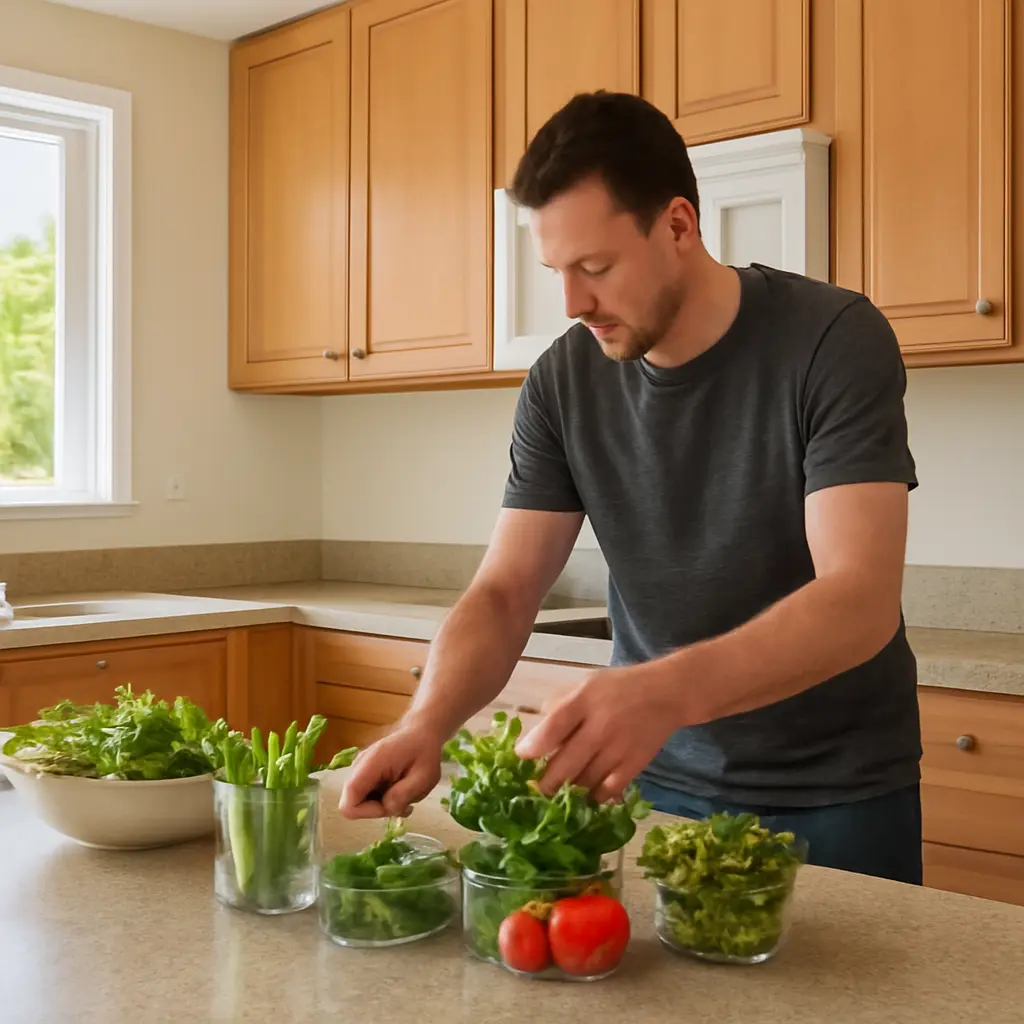
Family recipes carry more than ingredients: they preserve memory, technique, and the intentions of the cooks who made them. Adapting them for modern kitchens means keeping the dish’s defining character while adjusting equipment, measurements, ingredients, and food-safety practices. The U.S. Department of Agriculture’s 2022 Census of Agriculture counted 1.9 million U.S. farms, a reminder of the broad and changing food landscape behind family cooking. This guide explains how to identify a recipe’s original intent, translate older instructions, make careful substitutions, and document adaptations without losing what makes a dish feel like home.
Family recipe adaptation: definition and guiding principles
Family recipe adaptation is the process of modifying a dish’s method or ingredients to suit present-day tools, ingredients, dietary needs, and safety standards while preserving the qualities that give the recipe its meaning. The National Institute of Standards and Technology describes measurement as the assignment of values to quantities; that principle matters in cooking because reliable measurements help a cook understand what has changed and reproduce the result. A useful adaptation therefore distinguishes a recipe’s essential features—such as texture, flavor, or a traditional serving occasion—from details that can change, such as pan material or appliance settings.
The main categories include equipment conversion, measurement clarification, ingredient substitution, scaling, and food-safety updates. These adaptations are most successful when made deliberately: first identify the dish’s signature, then change one major variable at a time, and finally record the result. This approach bridges respect for inherited practice with the realities of contemporary kitchens.
Original intent: what a recipe is meant to preserve
Original intent is the purpose and defining character behind a recipe, rather than a requirement to reproduce every historical detail exactly. It may include a family’s preferred crisp crust, a particular spice profile, a celebratory role, or a practical method developed around the cookware once available. Ask relatives what they remember about the dish, compare versions, and note which qualities are consistently described. Those clues help separate a recipe’s identity from incidental instructions such as “bake until done,” which may reflect an oven unlike yours.
Modern kitchen adaptation: what can reasonably change
Modern kitchen adaptation means translating a recipe for current appliances, ingredients, and household needs. An old instruction to use a “moderate oven,” for example, needs interpretation rather than a guess: oven calibration, pan color, and whether the appliance is fan-assisted can affect cooking. The U.S. Department of Energy estimates that cooking accounts for about 4% of household energy use, so choosing an appropriately sized appliance and avoiding unnecessary preheating can also be practical considerations. Efficiency should not come at the expense of a dish’s texture or safe cooking.
Family recipe adaptation preserves flavor while translating equipment and technique
Preservation does not mean freezing a recipe in time. It means carrying its recognizable qualities into a different cooking environment. Older recipes often assume wood or coal ranges, hand-ground ingredients, variable cup sizes, or cookware that is no longer common. Contemporary cooks can retain the intended result by testing modern equivalents and recording specific temperatures, weights, and visual cues. The best translation keeps the recipe’s purpose clear while making its instructions repeatable.
Equipment conversion: ovens, stovetops, and cookware
Equipment conversion is the adjustment of a method to account for differences between historical and present-day tools. For an oven, begin with a reliable oven thermometer and check the dish earlier than the original timing suggests, especially when using convection. A dark metal pan absorbs heat differently from a shiny aluminum pan, while glass cookware may heat and retain heat differently again. For stovetop recipes, an induction burner may respond faster than a conventional electric coil, so temperature changes may require quicker attention. Treat time as an estimate and use doneness cues such as browning, tenderness, and internal temperature where relevant.
Measurement conversion: cups, spoons, and weights
Measurement conversion replaces vague or inconsistent quantities with clear, reproducible amounts. “A teacup,” “a handful,” and “a pinch” can vary among cooks, and flour scooped directly from a bag can pack differently from flour spooned into a measuring cup. For baking, weighing ingredients in grams is often more repeatable than relying on volume. NIST’s metrication resources explain the role of standardized units in consistent measurement; in practice, a kitchen scale lets families preserve an original ratio while reducing uncertainty. Keep the inherited wording alongside the tested modern measurement when documenting a recipe.
Technique translation: adapting method without erasing character
Technique translation adjusts how a cook accomplishes a task while maintaining the desired outcome. A slow-stirred sauce may be made in a heavier pan to reduce scorching, while a hand-mixed batter can be prepared with a stand mixer using a lower speed and close attention to texture. Pressure cookers and multicookers can shorten cooking time for braises and beans, but pressure and evaporation change the process; they are not automatic one-to-one replacements. Preserve the reason behind the original method—for instance, gradual browning or gentle thickening—when choosing a modern shortcut.
Family recipe adaptation manages substitutions, serving size, and dietary needs
Once equipment and technique are understood, ingredient and portion changes can be assessed. Substitutions are not interchangeable simply because ingredients have similar names: they may differ in moisture, fat, acidity, sweetness, or structure. Scaling also changes the dimensions of a dish, which can affect cooking time. The guiding question is whether the change supports a present-day need while preserving the recipe’s most recognizable qualities.
Ingredient substitutions: choosing by function
A successful substitution matches an ingredient’s job in the recipe, not just its category. In baking, eggs can provide structure, moisture, emulsification, or lift; a replacement that supplies moisture may not provide the same structure. Butter contributes water, fat, and flavor, while oil contributes fat but behaves differently when chilled or creamed with sugar. For savory dishes, replacing a salty cured ingredient with a lower-sodium alternative may require adjusting other seasonings. Make one substitution at a time, test a small batch when possible, and record the result before changing additional ingredients.
Scaling and portion changes: preserving proportions
Scaling changes a recipe’s quantities to suit a different number of diners, but cooking time does not always scale proportionally. Doubling ingredients in a deep pot can increase the time needed for the center to heat, while dividing a casserole between shallow pans may make it cook faster. Multiply or divide ingredient amounts carefully, then check texture and doneness rather than assuming the original time still applies. For baking, pan area and batter depth matter: a larger quantity in the same pan can produce a dense or underbaked center.
Dietary adaptation: honoring needs and family identity
Dietary adaptation modifies a recipe to meet health, religious, ethical, or personal needs. Where an allergy is involved, safety takes priority over resemblance: prevent cross-contact by cleaning work surfaces and utensils, checking labels, and following advice from a qualified health professional. The U.S. Food and Drug Administration identifies nine major food allergens for U.S. labeling, including milk, eggs, fish, shellfish, tree nuts, peanuts, wheat, soybeans, and sesame. For other changes—such as reducing sugar or replacing meat—consider how the ingredient contributes to flavor and texture, and explain the variation clearly so family members can choose the version that suits them.
Family recipe adaptation improves food safety and repeatability
A cherished recipe may predate today’s food-safety guidance, refrigeration, or calibrated thermometers. Updating safety instructions does not diminish its heritage; it makes the dish safer to share. The USDA Food Safety and Inspection Service advises keeping perishable food out of the temperature danger zone of 40°F to 140°F (4°C to 60°C), and recommends using a food thermometer rather than judging meat doneness by color alone. Inherited cooking times can remain useful as estimates, but a thermometer and current handling guidance provide a safer check.
Temperature and handling: modern safeguards
Food-safety adaptation adds current practices for storage, preparation, and cooking. Wash hands and surfaces, keep raw meat and its juices separate from ready-to-eat foods, refrigerate perishables promptly, and verify safe internal temperatures with a food thermometer. USDA guidance lists 165°F (74°C) for poultry, 160°F (71°C) for ground meats, and 145°F (63°C) for whole cuts of beef, pork, lamb, and veal followed by a three-minute rest. Because recommendations can change and foods differ, consult current USDA guidance for the specific ingredient and preparation.
Recipe documentation: preserving family knowledge
Recipe documentation records both the inherited version and the modern test so future cooks can understand the adaptation. Include ingredient quantities, pan dimensions, appliance settings, approximate timing, visual or tactile cues, substitutions, and the date tested. Add a note about the dish’s story—who made it, when it was served, and which details matter most to the family. A simple comparison table can clarify changes: original instruction, modern equivalent, reason for change, and result. This record turns individual experimentation into shared family knowledge.
Conclusion: adapt the method, preserve the meaning
Family recipe adaptation works best when cooks identify original intent, translate equipment and measurements carefully, evaluate substitutions by function, and update safety practices using trusted guidance. Modern tools can improve consistency, while thoughtful documentation protects the memories and techniques that give a dish its identity. Choose one family recipe, ask its keepers what makes it distinctive, test one change at a time, and save both the original and adapted versions. That small act helps the recipe remain meaningful—and practical—for the next generation.
Sources: U.S. Department of Agriculture, 2022 Census of Agriculture, https://www.nass.usda.gov/Publications/AgCensus/2022/; National Institute of Standards and Technology, Metrication and Measurement Resources, https://www.nist.gov/pml/owm/metric-si; U.S. Department of Energy, Energy Saver: Cooking, https://www.energy.gov/energysaver/cooking; U.S. Food and Drug Administration, Food Allergies, https://www.fda.gov/food/food-labeling-nutrition/food-allergies; U.S. Department of Agriculture Food Safety and Inspection Service, Safe Minimum Internal Temperature Chart, https://www.fsis.usda.gov/food-safety/safe-food-handling-and-preparation/food-safety-basics/safe-temperature-chart; U.S. Department of Agriculture Food Safety and Inspection Service, Danger Zone (40°F–140°F), https://www.fsis.usda.gov/food-safety/safe-food-handling-and-preparation/food-safety-basics/danger-zone-40f-140f