Heritage recipes are food traditions carried through families and communities, often taught by demonstration and oral instruction rather than fixed measurements. Preserving them means recording not just ingredient lists but also gestures, sensory cues, substitutions, stories, and the knowledge of the people who cook them. That work is urgent: the United Nations Educational, Scientific and Cultural Organization (UNESCO) recognizes food-related knowledge and practices as part of intangible cultural heritage, while the U.S. Census Bureau reported that 17.7% of the U.S. population was 65 or older in 2020. A careful preservation project can turn a conversation with an elder into a usable, respectfully attributed record without pretending that a recipe’s living context can be reduced to a card.
Oral Recipe Documentation: Definition, Value, and Scope
Oral recipe documentation is the systematic recording of cooking knowledge shared aloud, then organizing and checking that knowledge so others can understand and use it. It combines oral history, recipe writing, sensory description, and—when participants agree—audio, video, or photographs. UNESCO describes intangible cultural heritage as practices, knowledge, and skills that communities recognize as part of their cultural heritage; foodways can include preparation, sharing, and the knowledge attached to ingredients and occasions. This makes a heritage recipe more than a sequence of quantities: it may encode migration, faith, seasonality, family roles, and local adaptation.
The practical urgency is clear, although age alone does not determine whether someone can share or retain knowledge. U.S. Census Bureau data show the growing scale of older adulthood, and the National Institute on Aging notes that memory changes vary among individuals and are not an inevitable consequence of aging. The appropriate response is not to assume an elder is losing capacity, but to invite them to document knowledge while they wish and are able. The goal is a record that preserves both cooking instructions and the narrator’s authority over how their knowledge is represented.
Recipe as procedure, not just ingredient list
A documented recipe should describe actions and decision points: how ingredients are prepared, what order they enter the pot, how heat is adjusted, and how the cook recognizes readiness. “Cook until it smells nutty” or “add flour until the dough stops sticking” carries procedural information that a bare ingredient list misses. The Oral History Association’s principles emphasize informed consent, transparency, and responsible stewardship of recordings—useful standards when family cooking knowledge is being collected and shared.
Recipe as cultural and relational knowledge
A dish can be linked to a particular person, place, season, celebration, or hardship. Ask who taught the cook, when the dish is made, what ingredients mean to the family, and whether any parts are private or reserved for a specific community. UNESCO’s heritage framework centers the communities who recognize and transmit a practice; accordingly, documentation should not detach a recipe from its owners or present one person’s version as the only authentic version.
Oral Recipe Documentation Methods: Interview, Demonstration, and Verification
The main methods are conversational interviewing, hands-on cooking demonstrations, and follow-up verification. They work best together: an interview elicits memories and context, a demonstration reveals tacit technique, and verification resolves ambiguities without forcing the cook into artificial precision. The Library of Congress Veterans History Project and the Smithsonian Folklife and Oral History Interviewing Guide both offer practical models for preparing questions, recording clearly, and preserving contextual information.
Pre-interview planning and consent
Before recording, agree on the purpose, audience, storage, and permission to quote, publish, or share images. Ask whether the participant prefers audio, video, handwritten notes, or an unrecorded conversation. Identify sensitive details, names, and restrictions in advance, and make clear that the narrator may pause, skip a question, or withdraw permission according to the agreed terms. For family archiving, note who owns the original recording and who may access copies.
Open-ended oral-history questions
Open prompts encourage a cook to explain rather than merely confirm. Ask, “How did you learn this dish?”, “What do you look for before adding the next ingredient?”, and “What changes when you make it for a crowd?” Avoid leading questions that suggest a preferred family story. Record the speaker’s exact phrasing where possible, and distinguish their words from an editor’s interpretation. A short session focused on one dish is often more manageable than trying to capture an entire culinary history at once.
Live cooking demonstrations and sensory cues
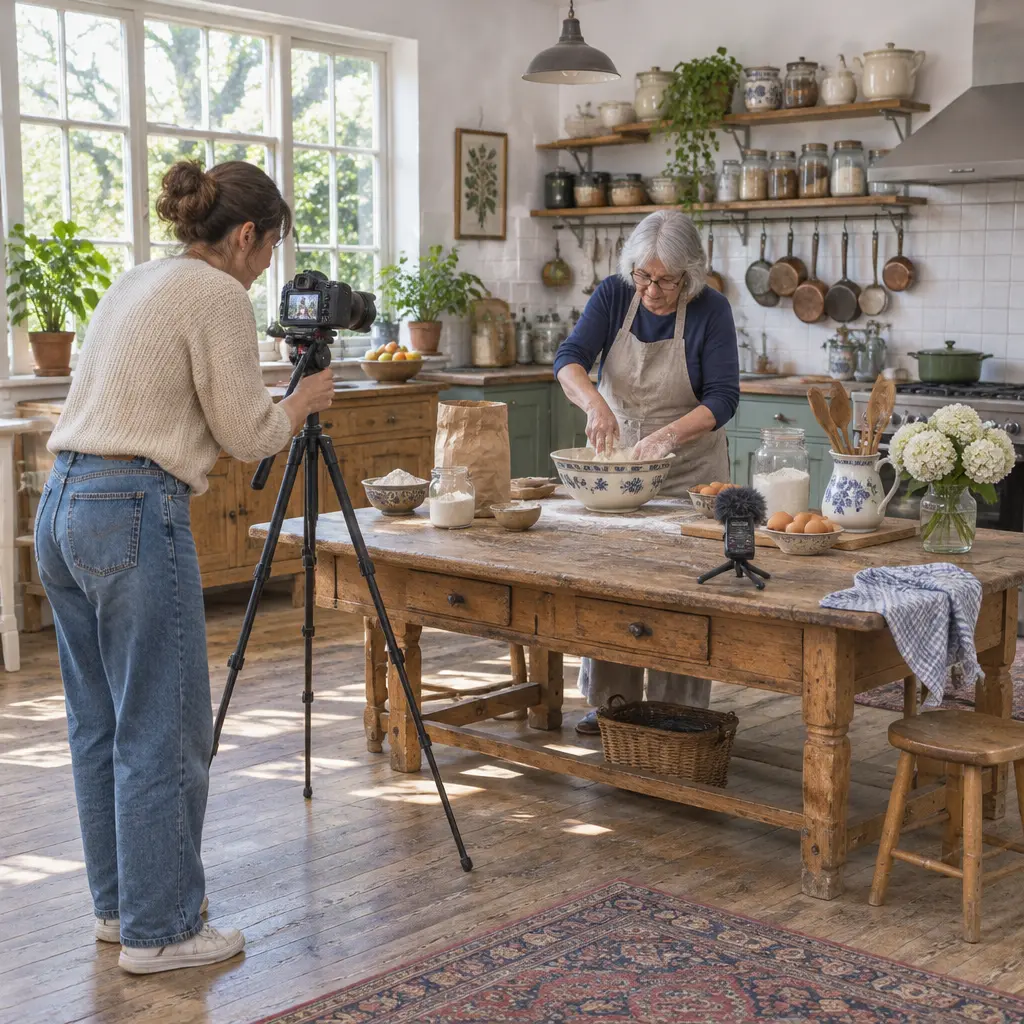
A demonstration captures embodied knowledge: hand movements, dough texture, pan sounds, visual color, and judgments about aroma. Position the camera or recorder so it does not obstruct the cook, and ask them to narrate actions as they happen. When a cook says “a little,” ask whether that means a spoonful, a handful, or an amount guided by texture—but do not insist that every tradition be converted to standardized units. Note vessel size, heat source, altitude or seasonal conditions when they materially affect the result.
Transcription, testing, and respectful verification
Transcription turns a recording into searchable text, but it should preserve uncertainty rather than silently “correct” it. Mark unclear words, estimate quantities as estimates, and return the draft to the cook or a designated family reviewer. If a recipe is tested, document who tested it, what equipment they used, and what changed; testing is a usability check, not proof that the elder’s version is wrong. Keep the original recording alongside edited copies so future readers can hear tone and context.
Heritage Recipe Records: Structure, Metadata, and Preservation
A strong recipe record joins a readable cooking format to archival context. The recipe itself should be easy to follow, while metadata—information about the record—helps future users identify its creator, date, source, rights, and version. The Library of Congress recommends descriptive information and stable organization for collection materials; applying similar habits to family recipes reduces the risk that recordings become disconnected from their stories.
Core fields for a usable recipe
Include the dish name and alternate names, narrator and interviewer, date and place recorded, ingredients, approximate quantities, equipment, sequence, heat level, timing cues, yield, serving traditions, and known variations. Separate exact measurements from approximations, such as “about two cups” or “add until the dough feels supple.” Add a glossary for regional terms and record ingredient substitutions as the narrator describes them. A version date helps distinguish later edits from the original account.
Audio, video, photographs, and file care
Choose media to match the knowledge being preserved: audio captures voice and conversation, video shows technique, and photographs document ingredients, tools, and finished dishes. Save original files in widely supported formats, keep more than one copy, and store copies in separate locations. The Library of Congress’s personal archiving guidance recommends making multiple copies and organizing files with descriptive names. A simple filename can include dish, speaker, date, and version; avoid relying on a phone or social platform as the only archive.
Access, attribution, and cultural boundaries
Not every recipe should be public. A narrator may want a record preserved for descendants but not posted online, or may ask that a sacred, medicinal, or community-specific practice remain restricted. Record the permission level in writing and revisit it before publication. Attribute the recipe to the person or community that shared it, describe adaptations honestly, and avoid claims of exclusive authenticity where multiple family or regional versions exist.
Oral Recipe Preservation in Practice: A Family Case Example
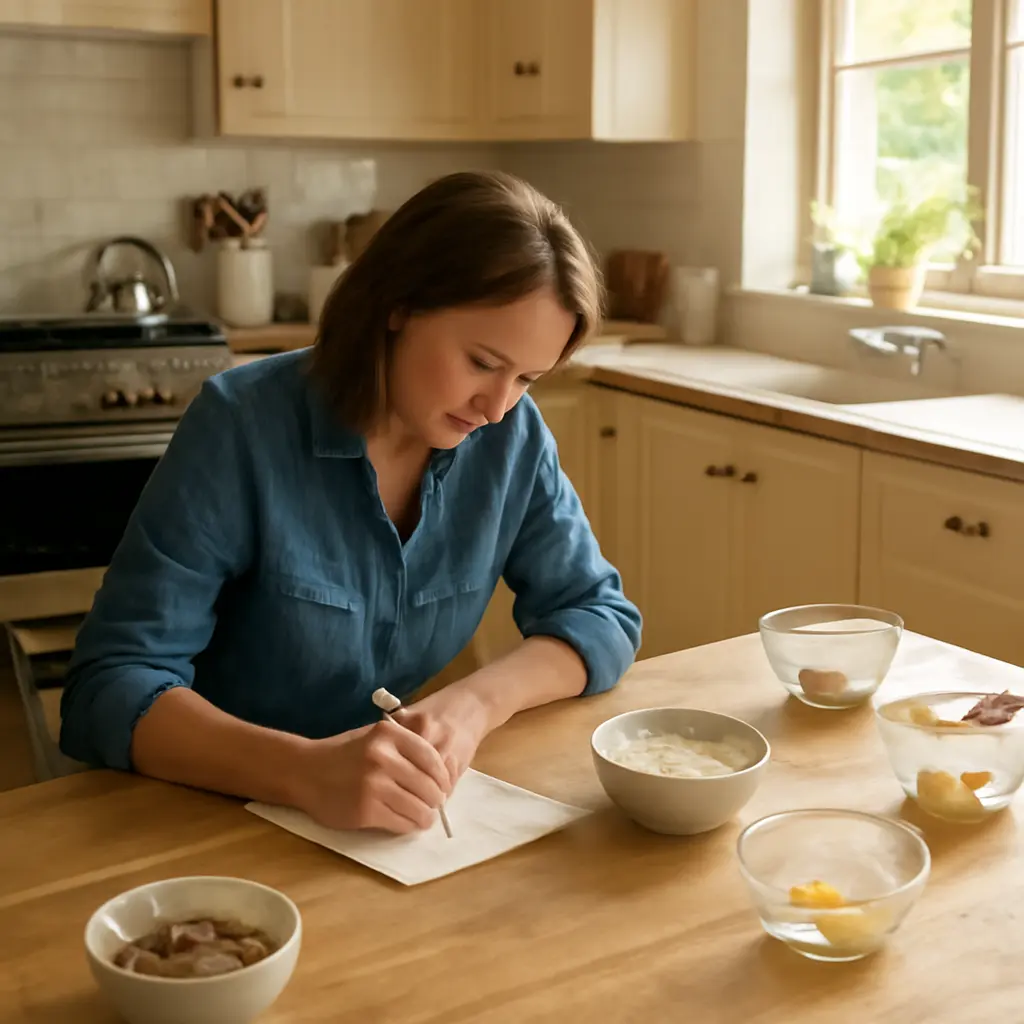
Consider a family documenting an elder’s holiday dumplings. In a first conversation, the interviewer records who taught the recipe and when the family serves it. During a second session, the elder prepares the dough while explaining that water is added gradually until it feels “soft but not sticky.” The interviewer films the hand movement with permission, notes the bowl and approximate flour quantity, and asks how the dough changes in dry weather. A family member then types a draft, clearly labels estimated measurements, and asks the elder to review it.
The final record contains a concise recipe, a transcript excerpt, a photograph of the inherited rolling pin, the date and location, and a note that the elder’s version differs from a cousin’s filling. The family stores the original recording and a backup, while sharing only the version the elder approved. This example illustrates why the method should preserve variation and provenance rather than flattening a living tradition into a supposedly definitive formula.
A useful visual aid is a “recipe record checklist” showing the relationship among four elements: spoken instruction, observed technique, written recipe, and permission/archiving notes. A family can mark each element complete before calling a record finished.
Conclusion: Preserve the Voice Alongside the Recipe
Oral recipe documentation preserves more than ingredients: it records procedure, sensory judgment, family memory, and the cultural relationships that give a dish meaning. Interviews, cooking demonstrations, careful verification, descriptive metadata, secure backups, and consent-based access make those records useful without displacing the people who hold the knowledge. Start with one willing narrator and one dish, record their words and technique, review the result with them, and preserve both the edited recipe and the original account. The best time to ask is while the cook is ready to share.
Sources: United Nations Educational, Scientific and Cultural Organization, “What is Intangible Cultural Heritage?”, https://ich.unesco.org/en/what-is-intangible-heritage-00003; U.S. Census Bureau, 2020 Census, “National Population by Characteristics: 2020–2025,” https://www.census.gov/data/tables/time-series/demo/popest/2020s-national-detail.html; National Institute on Aging, “Memory, Forgetfulness, and Aging: What’s Normal and What’s Not?”, https://www.nia.nih.gov/health/memory-loss-and-forgetfulness/memory-forgetfulness-and-aging-whats-normal-and-whats-not; Oral History Association, “Principles and Best Practices,” https://oralhistory.org/principles-and-best-practices-revised-2018/; Smithsonian Center for Folklife and Cultural Heritage, “Folklife and Oral History Interviewing Guide,” https://folklife.si.edu/the-smithsonian-folklife-and-oral-history-interviewing-guide/smithsonian; Library of Congress, “Personal Archiving: Preserving Your Digital Memories,” https://www.loc.gov/preservation/familyarchives/; Library of Congress, Veterans History Project, “Field Kit,” https://www.loc.gov/programs/veterans-history-project/how-to-participate/field-kit/.